sponsored links

Kia Soul 1.6 CRDi CAR review


By Ben Barry

16 October 2008 13:36

We got up close with the production Kia Soul a couple of weeks back at the 2008 Paris motor show, but today CAR has driven the Soul in Korea. It’s a B-segment offering from Kia, a model the Korean firm hope will help build on the Ceed’s success while attracting a younger audience. Think of it as our Mini or Fiat 500, say the Kia people.


The Kia Soul looks good to me...

Certainly does. Thank ex-Audi designer Peter Schreyer for that. The Soul’s bold creases, chunky wheelarches and slabby sides lend it a sense of solidity while the blacked-out A-pillars and wing vents add a mini-me Range Rover feel. It doesn’t just look sturdy, though; slam the doors and it sounds quality too, a chunky thunk emanating rather than the kind of tinniness you might expect from a Korean product.


How about inside the Soul?

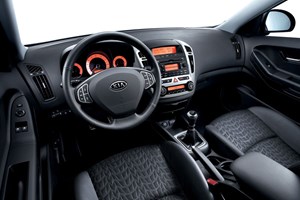
It can’t quite live up to the quality promised by the exterior and it’s off the pace when compared with European competitors like the new Ford Fiesta, but it’s not bad. In fact, as a whole it looks pretty good: clearly laid out controls, durable feeling fabric on the comfy (though unsupportive) seats and a tough-looking honeycomb design that covers the dash.

There’s even standard air-con and the option of an eight-speaker stereo (developed in-house) to please the funky urban types that Kia hope to attract – which sounds good.

But look at the parts that make up the whole and the façade falters – some of the lower plastics look cheap and scratch-prone while the door handles and electric window switches and surround look dated.

All top-spec models (possibly tagged Extreme and thought to account for around a fifth of sales) get a colour-coded dash with the upper sections of the front and rear seats coloured to match. It probably looks good on subtler hues, but our red test car was a tad too garish – a bit explosion in a Dulux factory for our tastes.

There are other options too: leather might be offered, but is not yet confirmed, while a range of so-called ‘character’ cars will be run for limited amounts of time. ‘Some might be more chic, others bling, girly or outdoorsy,’ said a spokesman. Quite.

The Kia Soul looks tiny. Will I fit?

Yes, unless you play basketball for the Miami Heat team. Your tester measures up at 6ft 2in in a stout pair of heels and found plenty of head- and legroom for four similarly sized adults – though some may be frustrated by the steering wheel only adjusting for rake, not reach. But the real compromise is in boot space, which is tiny. It was a struggle to line up two size 10 shoes end-to-end lengthways so getting a pushchair or even a large suitcase heaved in might be an issue.

You have to wonder if the target 20-something buyer might not be better served by a larger boot for storing their snowboards/guitar amps/base jumping paraphernalia than with spacious rear seats that will rarely be filled. A small boot didn’t hurt the Mini, mind, and you do get split-folding rear seats.

How does the Soul drive?

Nicely. CAR Online sampled both the 1.6 petrol and 1.6 diesel that will come to the UK. Avoid the petrol – it feels gutless, never really hits a sweet spot and needs thrashing to get anywhere. Yet the diesel is a peach: it’s refined and packs a zesty turbocharged punch from just 1500rpm that continues through the mid-range.

The gearbox comes only in a five-speed flavour across the range and isn’t the slickest we’ve experienced – it feels particularly vague and long of throw when you’re moving across the gate from, say, fifth to fourth.

The Soul's steering is light, progressive and precise but it also has a slight over-eagerness to self-centre at low speeds while a bit of extra resistance through high-speed corners wouldn’t go amiss.

Nonetheless, the Soul is a fun car to drive with taut body control and an agile front-drive chassis that dances through corners. The steering remained free of vibration, there was no kickback through the column and the damping generally adds an underlying layer of suppleness, but it did feel slightly clattery on the roughest surfaces.

Perhaps the 18-inch wheels were to blame (standard on the top-spec, probably optional on the two lesser specs), but we were unfortunately unable to sample the 16s.

Verdict

All in, the Soul is a good car, if not perfect. With an expected price range of around £12k-£14k, it has some tough competition in the B-segment (not least the new Fiesta), but its tough looks, entertaining dynamics and charcterful personality will no doubt see the 3000 units Kia hopes to shift annually in the UK snapped up quickly enough.

But are good cars like the Ceed and Soul good enough to shake Kia’s budget-cars-for-the-elderly image? We think so, but have your say by responding below.

Statistics

How much? £12,000
On sale in the UK: March 2009
Engine: 1.6-litre four-cylinder turbodiesel, 124bhp @ 4000rpm, 188lb ft @ 2000rpm
Transmission: Five-speed manual, front-wheel drive
Performance: Performance n/a, 137g/km
How heavy / made of? na
How big (length/width/height in mm)? na


CAR's rating

Rated 4 out of 5

Handling

Rated 3 out of 5

Performance

Rated 4 out of 5

Usability

Rated 3 out of 5

Feelgood factor

Rated 4 out of 5

Readers' rating

Rated 3.5 out of 5


Kia Ceed 1.6 Hybrid (2008) CAR review


By Jesse Crosse

22 September 2008 14:00

Kia has changed almost beyond recognition over the last few years, from a low-cost Korean brand to a maker of well-made European-designed cars that can hold their own with the best of them. Now it’s launching a full-scale attack on the advanced environmental technologies too, with plans to launch a hybrid first in the Korean market and later in Europe. Based on the Ceed five-door, it’s a mild hybrid, which means the electric motor can boost power but doesn’t deliver enough grunt to drive the car on its own.


What’s under the bonnet of this Kia Ceed Hybrid?

A 1.6-litre petrol engine combined with a 15kW (20bhp) integrated electric motor mounted inline on the engine’s crankshaft. The 180-volt electric motor is only used to boost power and provide regenerative braking when the car is slowing down. The prototype we drove still retains a conventional starter motor and alternator although the plan is to do away with those by the time the hybrid reaches production.

The power unit drives through a CVT transmission designed in-house and the whole lot is mounted transversely under the bonnet just like a conventional engine. Power is supplied from a 180-volt, 5.3Ah lithium-ion battery back, although the ancillaries work on 12-volts as usual.


Are the controls any different?

Only the instruments give away the fact that you’re driving a hybrid. A pair of LED gauges tell you what’s going on with the hybrid drive system, so as you accelerate a crescent of red lights registers battery drain and as you lift off, it swings anti-clockwise around the clock face registering the regenerative braking in green. There’s also an animated graphic showing the energy flow between the engine, motor, battery and wheels.


Does it drive like a normal car?

Accelerate from standstill and you instantly enter the rubber band regime as the CVT allows the engine revs to soar. Interaction between the engine and electric drive is seamless as you would expect it to be, but the wailing of the engine note under even modest acceleration soon begins to grate on the nerves.

The Ceed hybrid also has stop-start like that used on the new Ceed 1.4 ISG (Idle Stop and Go) which goes on sale in the UK next year. This is all due to the CVT transmission which designers of low consumption cars like to use because they can optimise the powertrain’s operating range all the time.

Trouble is, it sounds awful and it would have been good to see an automated manual used instead. It is smooth though, and once underway, refined with the steering, handling and stopping just like the conventional 1.6-litre five-door.


Verdict

'Yet another hybrid' you may cry and you’d be right. But the Ceed hybrid is an essential piece of Kia’s eco-armoury along with the fuel-cell Sportage, the drive system for which is a shared project with parent company, Hyundai. This hybrid drops the CO2 figures from 152gm/km of the standard 1.6-litre Ceed, to 114gm/km, an improvement of 25 percent. And these days, CO2 is what, rightly or wrongly, is the stick being used to beat manufacturers the hardest.

There are no dates for European introduction yet but the hybrid will see action first in Korea, where it will appear as a dual-fuel hybrid capable of running on either petrol or LPG. First versions will probably wear Hyundai badge before being launched under the Kia banner too, then moving to the US and Europe. There are no prices yet, but with Kia’s value-for-money reputation this could be the one to watch in the hybrid market. Technically, it’s a neat enough package, if still a little rough around the edges, but you’ll need to be CVT-tolerant to live with it.


Statistics

On sale in the UK: Not before 2010
Engine: 1591cc 4-cyl 120bhp (petrol engine) and 20bhp (electric drive)
Transmission: CVT automatic, front-wheel drive
Performance: tba, 62mpg (estimated), 114gm/km
How heavy / made of? tba/steel
How big (length/width/height in mm)? 4235/1790/1480

CAR's rating

Rated 3 out of 5

Handling

Rated 3 out of 5

Performance

Rated 3 out of 5

Usability

Rated 4 out of 5

Feelgood factor

Rated 2 out of 5

Readers' rating

Rated 3 out of 5


Kia Proceed


Kia Proceed

How much? £12,295
On sale in the UK: Now
Engine: 1991cc 4-cyl 16v turbodiesel, 138bhp @ 4000rpm, 225lb/ft @ 1800-2500rpm
Transmission: Five- or six-speed manual, front-wheel drive (four-speed auto also available)
Performance: 10.1sec 0-62mph, 127mph, 50.4mpg, 149 g/m CO2
How heavy / made of? 1499 kg/steel
How big (length/width/height in mm)? 4250/1790/1450


Stupid names for cars aren’t new. We’re had the Nissan Gloria, the Ford Probe and the Mazda Bongo Brawny van after all. But in the long roll call of daft designations, the Kia pro_cee’d (note the lower case ‘p’, the underscore and apostrophe) takes top prize. The pro_cee’d is the three-door sportier version of the cee’d, the new European-built Kia five-door hatch.

The cee’d name, should you be wondering, comes from the car’s French designer (Gregory Guillaume) who – mindful that this is a European designed and built car – decided on calling it after the French for EEC: CEE. Then he added ED (for European Design). Because ceeed would have been an even stupider name, the enterprising Guillaume apostrophised it to cee’d. And the ‘pro’ bit for the new three-door variant? Well that just sounded good, or so someone thought. So to what is probably the least desirable car brand in Britain – Kia – add probably the daftest model name. Brilliant.


OK but is it any good?

Yes it is. Forget about all those horrible old Kias of a few years ago (and even the new Korean-built ones have price as their main virtue). The cee’d hatch and this new model, the three-door pro_cee’d, are European standard cars in all but name. Designed by Kia in Germany, built by Kia in a high-tech factory in Slovakia.

The Proceed (can we forget about all the crazy punctuation please?) looks good in a slightly Euro-derivative way (think three-door Astra but with a bit less jewellery). It’s lower and longer than a cee’d; only the bonnet and front wings are borrowed. Proportions are excellent, stance is good. Build quality is also first rate. And the cabin is minimalist mix of nicely tactile plastics and alloy trim. It’s one of the nicest interiors in the Golf-sized hatch class. A first for a Korean car.


What are the engines?

Carry over (from the cee’d) 1.6 petrol and 1.6 turbodiesel and, new for the Proceed, a 2.0-litre turbodiesel (borrowed from the Sportage 4x4, also built in Slovakia). Both 1.6 units are sweet revving and gutsy. Avoid the sportiest engine, the 2.0D. It’s loud and crude.

The 1.6 diesel is the newest engine and the pick. But if your budget can just stretch to the entry level 1.6 pro_cee’d2 (more crazy punctuation!) – a bargain at £12,295 – then smile. The cheapest Proceed is a sweet little thing, willing and smooth riding. (An even cheaper 1.4 Proceed is coming soon, at £11,795.)


But can a cheap hatchback Kia be fun to drive?

It’s no Focus. But it’s not too far behind. The electric power steering is a bit lifeless and you won’t be throwing this car around the twisties for the fun of it (like you might a Focus). But it is extremely capable and the ride is good if a little firm. It’s a perfectly pleasant and appealing car.


So is this a first? A Korean car that you’re recommending?

Yes, the Proceed is a really capable car, good looking, decent to drive, well equipped (air-con and iPod jack are standard) and well made. It’s not just the best Korean car on sale today, it’s also one of the most pleasant small hatches available in Britain. And, most appealing of all, it undercuts similar-spec similar-standard hatches by £2000-£4000 and has a seven-year warranty.

CAR's rating

rating is 4

Handling

rating is 3

Performance

rating is 3

Usability

rating is 4

Feelgood factor

rating is 5

Readers' rating

rating is 4

Kia Sportage FCEV


Kia Sportage FCEV

On sale in the UK: 2012 (estimate)
Engine: Three electric motors, 107bhp total
Transmission: Five-speed automatic, front-wheel drive
Performance: 10.0secs 0-60mph (est), 88mph
How heavy / made of? na/steel
How big (length/width/height in mm)? 4350/1840/1730


What is a FCEV?

It stands for Fuel Cell Electric Vehicle, and this Sportage SUV is Kia’s latest attempt at a hydrogen-powered car. This technology has been the talk of the industry for the last decade as the ultimate in eco-friendly motoring.

Most experts thought production cars were another ten to 15 years away, as sky-high development costs and a lack of accessible filling stations were the stumbling blocks. However, Honda recently announced it would sell a £50,000 fuel cell saloon from next year in America and Japan, so all car makers are now re-assessing their plans.


Why is a small player like Kia making a hydrogen car?
Kia is still a relatively young auto company, having made its first ever car as recently as 1974. But after it joined forces with Hyundai a decade ago growth has been phenomenal, and it has recently announced ambitious plans. Compared with 2006, it wants a 90 percent increase in global sales by 2010.

The UK dealer network is to grow from the current 140 outlets to 170 by the same year. The first hybrid car will be launched in Korea in 2009 and in Europe by 2012. Fuel cells, as the ultimate in 'green' driving, are the logical next step.


How does the Sportage FCEV work?

Hydrogen isn’t just about making big bombs. On the Sportage FCEV, the gas is stored at 700-bar pressure in twin 76-litre tanks. It’s then piped into a fuel cell stack, which is about the size of a big shoebox, where it combines with oxygen to make electricity.

This electricity is then stored in a battery and used to drive three electric motors developing 107bhp in total. All that comes out of the exhaust is water vapour. You fill the car at a special H-pump, but it’s just like topping up with regular fuel.


How is this Sportage different to today’s model?

If you ignore the stickers down the car’s flanks, visually there’s no difference at all. You’ll only notice anything unusual when you drive it. Shift the automatic gear selector into Drive, press the throttle and… there’s virtually no noise.

The one thing you can hear is a whining sound as you speed up. It’s because the system puts about fifty percent more hydrogen into the fuel cell stack than is actually needed, to make sure there’s enough to flood every corner of it. The whine is the pump, which collects the excess and recycles it.


What about under the bonnet?

As it’s not your standard internal combustion engine, there are big differences when you pop the hood. Visually the engine bay is just a collection of aluminium-topped boxes, one of which features a small digital counter.

Its role is to measure the number of starts-ups because this is the main cause of degradation of the fuel cell. Engineers say they reckon this issue will be fixed before the public can buy this car, so it will only be a feature of this prototype.


Is the FCEV quick?

The FCEV’s performance figures aren’t staggering, but they’re not bad either. The car will hit 60mph in around ten seconds – at least as quick as a standard Sportage – and go on to 88mph.

The range between fill-ups is a respectable 240 miles. It doesn’t sound much, but it’s a major improvement on previous attempts. Hyundai-Kia’s first fuel cell car was a Santa Fe SUV, which had a range of just 100 miles. Its successor – which debuted in 2004 and was based on a Hyundai Tucson – could manage 212 miles.


Verdict

Kia’s efforts to create a viable fuel cell car are at least as impressive as those of some other, much larger, auto companies. But the big question is when will a FCEV hit the showrooms? Bosses say their next hydrogen vehicle, due in 2012, will be 'ready for commercialisation'. Power and range will rise to 134bhp and 375 miles respectively, they say.

But will it go on sale? The answer is they’ve not yet decided. It depends on the state of the hydrogen infrastructure at that time; the argument is if there’s no pumps for drivers to fill up from, there’s no sense in having the car on sale. And it’s a fair point.

CAR's rating

rating is 3

Handling

rating is 3

Performance

rating is 2

Usability

rating is 4

Feelgood factor

rating is 4

Readers' rating

rating is 3.5

Kia Picanto 1.1 Ice


Kia Picanto 1.1 Ice

How much? £6,995
On sale in the UK: Now (all other trims in January)
Engine: 1086cc 4-cyl, 64bhp @ 5500rpm, 72lb/ft @ 2800rpm
Transmission: Five-speed manual, front-wheel drive
Performance: 15.1sec 0-62mph, 96mph, 53.3mpg, 126g/km
How heavy / made of? 1012kg/steel
How big (length/width/height in mm)? 3535/1595/1480


Hmm. It looks a bit better than the old car

It does, doesn’t it? Out goes the old cat’s arse grille, to be replaced with something altogether neater. There are new bumpers front and rear, a new bonnet, front wings and light units. The intention was to give the Picanto a family resemblance to its big brother, the Ceed hatchback. Not sure about those bug-eyed headlights, though.

Tidied up styling isn’t the only change to the face-lifted Picanto. The cabin has had a refresh, too, with a new fascia, better plastics, and a proper integrated stereo instead of a fiddly aftermarket unit. Even the indicator stalk is now on the left-hand side, so no more indicating with the windscreen wipers.


Yes, but is it any better to drive?

Er, no. The chassis has been left alone, so there’s still the same choppy ride and bags of lean through corners. There’s little feedback through the wheel. If you want a city car that’s enjoyable to drive the Fiat 500 is a much better bet.

The Picanto is more at home in town than on a favourite back road. The ride is still poor, but the half-pint dimensions, 4.6-metre turning circle and light steering combine to make parking a doddle.


What about the engines?

As before, there’s just the two to choose from: a 61bhp 1.0-litre and a 64bhp 1.1-litre petrol.

While there might not be much between them in power, the 1.1-litre has a lot more torque. It’s the one to go for unless you want the paperboy on his pushbike to beat you away from the lights.

Even with the 1.1, performance is leisurely, reaching 62mph in 15.1 seconds. Keep your foot on the floor and it will max out at 96mph, but don’t hold your breath, and be prepared for lots of engine and road noise on the way.


Cheap to fuel, though, I suppose?

That’s the big compensation for accepting such lacklustre performance. The 1.0-litre promises 57.6mpg on the combined cycle. The 1.1 should achieve 53.3mpg, and even the 1.1 auto manages a respectable 47.1mpg.

There is a 1.1 diesel Picanto in some markets, but there are no plans to bring it to the UK. Kia says UK fuel pricing and the Benefit-in-Kind tax penalty for diesels mean demand would not be high enough, especially when the petrol models are so economical.


It looks tiny. Can’t be much room inside

Space is very tight. The narrow cabin means you’ll bump elbows with the front seat passenger every time you change gear, and tall drivers will run out of rear-seat travel long before they find a comfortable driving position. At least there’s now height adjustment for the driver’s seat on all but the entry-level car.

This basic model makes do with two seatbelts in the back, although the rest of the range can seat five – in theory. In practice, three across the back is realistic for short trips only.

On the other hand this is a city car, so it’s churlish to be too critical of limited space, and the finish is a step up in quality over the pre-face-lift car. But rivals like the Daihatsu Charade and Fiat Panda both have more practical cabins.


I think I’ll pass, thanks. Or is there something I’m missing?

Two words. ‘Price’ and ‘value’.

The most basic Picanto 1.0-litre costs just £5995. That’s £1000 less than a boggo spec Panda and nearly £1500 less than the cheapest Daihatsu Sirion.

The Picanto 2 1.1-litre starts at £6795, so still undercuts these two rivals. Leather trim for the steering wheel and gearknob, a height-adjustable steering wheel, driver’s seat height adjustment and remote central locking are standard. Another £200 buys the Ice model, and adds air-conditioning to the list of standard kit.

Kia describes the Picanto 3 as the sports-luxury model (and somehow keeps a straight face). Heated door mirrors, 15-inch alloys, front fog lamps and alloy pedals are added to the list of goodies, with a price tag of £7995.

What’s more, it’s rumoured that the warranty might soon be extended from three to five years’ cover.


Verdict

The Picanto is not a very ‘Car’ car. It’s not quick, it’s not fun, it’s not innovative or particularly stylish.

But judged on its own terms, it’s a better car than you might credit. Prices are low and running costs are rock bottom. So long as you avoid the entry-level models, equipment levels are reasonable, too. Anyone on a tight budget but determined to own a new car could do worse.

CAR's rating

rating is 2

Handling

rating is 2

Performance

rating is 2

Usability

rating is 2

Feelgood factor

rating is 2

Readers' rating

rating is 2